Battleships Logic Puzzle: A Comprehensive Guide to Grid-Based Deductive Reasoning Resources
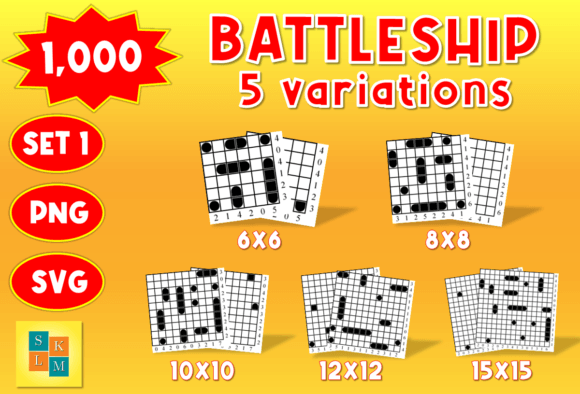
The landscape of cognitive training and recreational mathematics often centers on grid-based challenges that demand rigorous mental engagement. Among these, the Battleships logic puzzle stands out as a premier exercise in spatial reasoning and deductive elimination. Unlike games of chance or simple word searches, this format requires the solver to synthesize numerical constraints with geometric possibilities to arrive at a singular, verifiable solution. For educators, content creators, and enthusiasts seeking substantial material, understanding the structural nuances of these puzzles is essential. This analysis explores the mechanics, cognitive benefits, and practical applications of a comprehensive collection featuring 1,000 unique puzzles across five distinct grid variations.
Cognitive Architecture and Mental Benefits
Logic puzzles are frequently categorized merely as entertainment, yet their function extends deeply into cognitive maintenance and development. The Battleships logic puzzle serves as a robust gymnasium for the brain, specifically targeting executive functions located in the prefrontal cortex. Engaging with these grids activates multiple neural pathways simultaneously, creating a compound effect on mental acuity.
Deductive Reasoning and Systematic Elimination
The core mechanic of this puzzle type is not guessing, but rather the systematic elimination of impossibilities. Solvers must evaluate row and column tallies against known ship segments. This process reinforces conditional logic: if a specific cell contains water, then adjacent cells must also be water due to diagonal separation rules; conversely, if a cell contains a ship end, an adjacent orthogonal cell must contain a ship segment. This continuous chain of "if-then" processing strengthens the ability to handle complex variables in professional and academic settings.
Pattern Recognition and Spatial Visualization
While numbers provide the framework, success relies heavily on visualizing spatial arrangements. Players must mentally rotate and place multi-cell vessels within confined boundaries without violating adjacency rules. This enhances spatial intelligence, a skill critical for fields ranging from architecture and engineering to graphic design and data visualization. The transition from abstract numerical clues to concrete geometric placement bridges the gap between analytical and creative thinking.
Sustained Attention and Focus
In an era of fragmented attention spans, completing a 12x12 or 15x15 grid requires prolonged periods of deep focus. The immediate feedback loop inherent in logic puzzles—where a single error eventually leads to a contradiction—trains the mind to maintain high levels of concentration and self-correction. This meditative state of flow reduces stress while simultaneously sharpening mental endurance.
Structural Variations and Difficulty Progression
A significant advantage of utilizing a diversified puzzle set is the ability to scale difficulty appropriately for different audiences. The inclusion of five specific grid sizes allows for a granular approach to skill development and content creation. Each size presents unique tactical challenges and serves different use cases.
- 6x6 Grids (200 Puzzles): These compact grids serve as ideal entry points for beginners or younger students. With fewer cells and typically smaller fleets, solvers can grasp fundamental rules quickly. They are perfect for warm-up exercises, classroom handouts, or quick daily brain teasers that do not require extensive time commitments.
- 8x8 Grids (200 Puzzles): Stepping up in complexity, the 8x8 format introduces more variables while remaining manageable. This size strikes a balance between accessibility and challenge, making it suitable for intermediate solvers and standard activity books aimed at general consumers.
- 10x10 Grids (200 Puzzles): Often considered the classic standard for Battleships logic puzzles, the 10x10 grid offers substantial depth. It requires more sophisticated lookahead strategies and is appropriate for dedicated hobbyists and competitive puzzlers. This size provides enough complexity to remain engaging over long sessions without becoming overwhelming.
- 12x12 Grids (200 Puzzles): Advanced territory, these grids demand rigorous bookkeeping and advanced deduction techniques. They are excellent resources for expert-level publications or specialized cognitive training programs where the goal is to push the limits of working memory.
- 15x15 Grids (200 Puzzles): Representing the pinnacle of difficulty in this collection, 15x15 puzzles are marathon challenges. They test stamina and advanced pattern recognition, serving as capstone experiences for puzzle books or elite logic competitions.
Technical Specifications for Content Creators
For publishers, educators, and digital product sellers, the utility of a puzzle resource lies in its technical flexibility. This listing provides assets in both SVG and PNG formats, accompanied by solutions, ensuring versatility across print and digital mediums. Understanding the distinction between these formats is crucial for professional output.
Vector vs. Raster Utility
The inclusion of SVG (Scalable Vector Graphics) files is particularly valuable for print-on-demand services and high-resolution publishing. Vectors allow for infinite scaling without pixelation, ensuring crisp lines and text whether printed on a pocket-sized notebook or a large-format poster. This format is editable in vector software like Adobe Illustrator or Inkscape, allowing creators to customize colors, add branding, or adjust line weights to match specific publication standards.
PNG files offer immediate usability for digital platforms, websites, and apps. As raster images, they are universally compatible and require no specialized software to view or insert into documents. Having both formats included eliminates the need for conversion workflows, streamlining the production process for mixed-media projects.
Solution Keys and Verification
Every puzzle includes a corresponding solution, which is non-negotiable for commercial and educational integrity. Solutions serve dual purposes: they allow for answer key generation in published books and enable automated verification in digital applications. Furthermore, studying solved grids helps creators understand valid puzzle construction, aiding in the development of original content or the modification of existing templates.
Practical Applications Across Sectors
The versatility of the Battleships logic puzzle extends far beyond personal entertainment. Various professional and educational sectors leverage these resources to achieve specific objectives.
Educational Environments
Teachers utilize these puzzles to reinforce mathematical concepts such as coordinate geometry, set theory, and logical proofs. The structured nature of the grid makes abstract concepts tangible. In STEM curricula, they serve as engaging supplements to computer science lessons on algorithms and constraint satisfaction problems. The availability of multiple grid sizes allows educators to differentiate instruction, providing accessible challenges for struggling students while offering enrichment for advanced learners.
Publishing and Digital Products
Independent authors and KDP publishers rely on high-volume, varied puzzle collections to create profitable niche books. A set of 1,000 puzzles provides sufficient raw material for multiple themed volumes, such as "Travel Edition," "Expert Challenge," or "Kids' Introduction." The zipped file structure facilitates organized asset management, allowing creators to batch-process images for efficient book layout.
Cognitive Therapy and Senior Care
Occupational therapists and senior care facilities employ logic puzzles as tools for cognitive rehabilitation and maintenance. The structured, rule-based nature of Battleships provides a sense of order and accomplishment for individuals recovering from neurological events or managing age-related cognitive decline. The progressive difficulty curve allows therapists to tailor activities to individual capability levels, tracking improvement over time through completion rates and accuracy.
Implementation Guidelines and Best Practices
To maximize the value of this puzzle collection, users should adhere to specific implementation strategies. The attached notes regarding gameplay and recommended tools are essential starting points, but broader considerations ensure long-term success.
Trademark Awareness and Legal Compliance
A critical consideration for any commercial user is intellectual property. While "Battleships" is often used generically to describe this genre of logic puzzle, it is historically associated with a trademarked board game. Users intending to sell products derived from this listing must conduct thorough trademark research. Using descriptive alternatives such as "Naval Logic," "Fleet Placement Puzzle," or "Grid Warships" may mitigate risk. Always verify current trademark status in your target jurisdiction before publishing or selling.
Quality Assurance Workflow
Even when using pre-generated puzzles, a quality assurance step is recommended. Randomly sampling puzzles from each difficulty tier ensures they meet expected standards for uniqueness and solvability. For creators modifying SVGs, checking layer organization and stroke consistency prevents printing errors. Maintaining a master catalog of used puzzles prevents accidental duplication across multiple publications.
User Experience Design
When integrating these puzzles into books or apps, presentation matters as much as content. Clear instructions, adequate white space around grids, and legible typography significantly impact user satisfaction. For larger grids like 12x12 and 15x15, consider landscape orientations or fold-out pages to prevent cramping. Providing scratch space or margin notes areas enhances the solving experience, acknowledging that complex deduction often requires external notation.
Resource Organization and File Management
Managing 1,000 individual puzzle files requires systematic organization. The zipped delivery format suggests a hierarchical directory structure mirroring the grid sizes. Maintaining this organization is vital for workflow efficiency. Renaming conventions that include difficulty level, puzzle number, and format (e.g., 10x10_Puzzle_045_Solution.svg) facilitate searchability and batch processing. Backing up original source files before editing preserves the integrity of the master collection, allowing for future iterations or format conversions without quality loss.
The intersection of cognitive science, educational pedagogy, and commercial publishing finds a practical nexus in the Battleships logic puzzle. Whether utilized for personal mental fitness, classroom instruction, or product development, this collection of 1,000 puzzles across five grid variations offers a foundational resource. By understanding the underlying cognitive mechanisms, respecting technical specifications, and adhering to best practices in implementation and legal compliance, users can transform these grid-based challenges into meaningful, engaging, and professionally viable assets. The enduring appeal of deductive reasoning ensures that such resources remain relevant across changing trends, providing timeless value to those who invest in the power of structured thought.