Minesweeper 20x20 Logic Puzzle: A Versatile Resource for Creators and Critical Thinkers
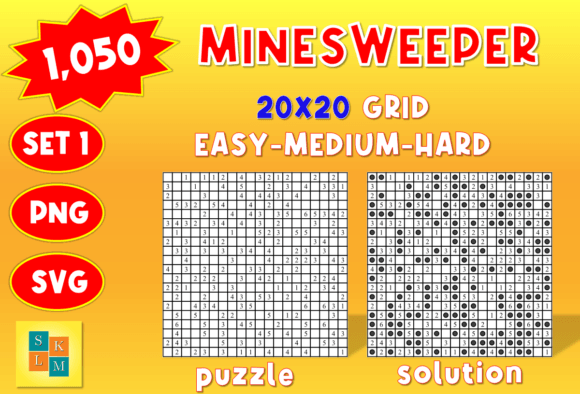
The Minesweeper 20x20 logic puzzle represents a significant step up from standard grid games, offering a dense, satisfying challenge that appeals to dedicated solvers and content creators alike. Unlike the smaller grids found in casual mobile apps, a 20x20 layout provides enough complexity to serve as a standalone brain-training exercise or a premium component in published puzzle books. This specific collection of 1,050 puzzles, categorized into easy, medium, and hard difficulties, bridges the gap between recreational gaming and professional publishing resources. Whether you are an individual looking to sharpen your deductive reasoning skills or an entrepreneur seeking high-quality assets for KDP or Etsy, understanding the practical applications of this format is essential for maximizing its value.
Beyond Recreation: Real-World Cognitive Applications
While often categorized simply as a game, the Minesweeper 20x20 logic puzzle functions as a rigorous tool for cognitive maintenance and development. For adults aged 20 to 50, the benefits extend far beyond passing time during a commute. The 20x20 grid size is particularly effective because it forces the brain to hold multiple variables in working memory simultaneously. In a smaller 10x10 grid, patterns can often be recognized visually without deep processing. However, expanding to 400 cells requires systematic elimination and sustained focus, making it an excellent exercise for professionals who rely on analytical thinking.
Consider software developers, data analysts, or engineers who spend their days debugging code or interpreting complex datasets. Engaging with these puzzles offers a form of "cross-training" for the brain. It reinforces the same neural pathways used in troubleshooting and logical deduction but in a low-stakes, gamified environment. Many users report that solving a few hard-level puzzles before starting work helps induce a flow state, priming the mind for detailed technical tasks. Similarly, educators and tutors have begun incorporating these larger grids into STEM curriculums for advanced students, using them to teach binary logic, probability assessment, and algorithmic thinking without the intimidation factor of traditional mathematics.
Empowering Puzzle Book Publishers and Content Creators
For the growing community of self-publishers and digital product creators, this listing serves as a foundational asset library. Creating 1,050 unique, error-free logic puzzles manually is a monumental task that could take months. Having access to pre-generated, solution-verified SVG and PNG files drastically reduces the production timeline for activity books, senior cognitive therapy workbooks, or niche puzzle anthologies. The inclusion of three distinct difficulty tiers allows creators to build comprehensive books that cater to a wide audience, preventing user frustration while ensuring long-term engagement.
The vector-based SVG format is a critical practical consideration for print-on-demand services like Amazon KDP or IngramSpark. Raster images can become pixelated when resized, leading to poor reviews and returns. With SVG files, you can scale the 20x20 grids to fit any trim size—from pocket-sized travel books to large-print editions for visually impaired solvers—without losing crispness. This flexibility opens up multiple revenue streams from a single asset pack. You might create a standard paperback for general enthusiasts, a large-print edition for seniors, and a digital download bundle for tablet users, all derived from the same source files.
Niche Markets and Specialized Use Cases
The versatility of the Minesweeper 20x20 logic puzzle extends into specialized markets that often go underserved. Corporate wellness programs, for example, are increasingly seeking non-digital team-building activities that promote mental health and collaborative problem-solving. Printed sheets of these puzzles can be used in workshops to demonstrate communication strategies, as teams must articulate their logical deductions to solve the grid collectively. Unlike word searches or crosswords, which are often solitary and language-dependent, Minesweeper is purely mathematical and visual, making it accessible to diverse, multilingual workforces.
In therapeutic settings, occupational therapists and neuropsychologists utilize structured logic puzzles as part of cognitive rehabilitation protocols for patients recovering from traumatic brain injuries or managing early-stage dementia. The 20x20 format offers adjustable scaffolding; therapists can start with easy puzzles to rebuild confidence and gradually introduce medium and hard variations as executive function improves. The clear, unambiguous rules of Minesweeper make it superior to abstract puzzles for this purpose, as there is always a definitive correct answer based on logic rather than subjective interpretation. Having 350 puzzles per difficulty level ensures that practitioners never run out of fresh material for long-term treatment plans.
Practical Considerations Before Implementation
Before integrating these puzzles into a product line or personal routine, it is important to understand the nuances of the 20x20 format. This size occupies a unique middle ground; it is too large for quick, two-minute solves but manageable enough for a 15-to-30-minute focused session. When designing a book layout, ensure adequate white space around the grid. A 20x20 puzzle crammed into a 6x9 inch page can feel claustrophobic and difficult to mark, especially for users with motor skill limitations. Testing print proofs at actual size is non-negotiable to verify that individual cells are large enough for pencil notation.
For those using the included notes on recommended tools, pay close attention to file organization. Managing over 3,000 individual files (puzzles plus solutions across three formats) requires a robust naming convention and folder structure from day one. Many creators find it helpful to batch-process the SVGs into PDF signatures immediately upon download to streamline the book interior assembly process. Additionally, while the puzzles are pre-generated, adding your own branding, instructions, or thematic elements will differentiate your product in a crowded marketplace. The raw assets provide the engine, but your creative packaging provides the value.
Evaluating Strengths and Limitations
The primary strength of this collection lies in its volume and format diversity. Few resources offer over a thousand verified puzzles with both vector and raster options, making it an exceptional value for bulk users. The separation of solutions from puzzles also reflects professional publishing standards, allowing for easy creation of answer keys at the back of a book or in a separate downloadable file. However, users should be aware that Minesweeper has a learning curve. Unlike Sudoku, which has near-universal recognition, some audiences may need more detailed instructional diagrams. The attached "how to play" notes are valuable here, but you may want to supplement them with visual tutorials if targeting complete beginners.
Another consideration is market saturation. Generic puzzle books face stiff competition. Success with these assets often depends on finding a specific angle—whether that’s “Logic Puzzles for Programmers,” “Mindfulness Through Math,” or “Large Print Brain Training for Seniors.” The 20x20 size itself can be a selling point when positioned correctly; marketing it as “Extended Play” or “Deep Focus” distinguishes it from the abundance of quick-fix puzzle apps. Ultimately, the Minesweeper 20x20 logic puzzle is less of a finished product and more of a high-grade raw material. Its true utility emerges when matched with a clear understanding of your end user’s needs, whether that user is seeking mental sharpness, educational tools, or a profitable publishing venture.