Evaluating Water Polo Logo Vector Icon Design for Professional Use
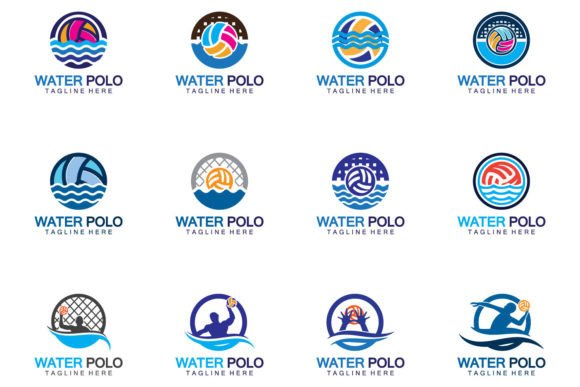
In the niche of aquatic sports branding, finding high-quality visual assets that accurately represent the intensity and technicality of the game is a frequent challenge. Water Polo Logo Vector Icon Design serves as a critical resource for marketers, club administrators, and graphic designers who need to communicate the essence of this demanding sport without resorting to generic swimming or volleyball imagery. Unlike raster-based clip art, a true vector icon set provides the mathematical precision required for scalable applications, ranging from small social media avatars to large-format championship banners. The value of these designs lies not just in their aesthetic appeal, but in their functional ability to convey complex concepts like teamwork, competition, and athletic endurance through simplified, reproducible symbols.
Core Characteristics of Effective Aquatic Sport Vectors
When assessing Water Polo Logo Vector Icon Design, professionals must look beyond surface-level aesthetics to evaluate structural integrity and semantic accuracy. A successful icon in this category must balance artistic abstraction with recognizable sport-specific details. The most effective designs capture the unique interplay between the player, the ball, and the water environment. This often involves stylized representations of splashes, waves, and dynamic body positioning that distinguish water polo from other pool-based activities.
Scalability and Geometric Precision: The primary advantage of utilizing vector formats (such as SVG, EPS, or AI) is infinite scalability without pixelation. For a tournament organizer creating signage for both digital screens and physical venue wayfinding, this consistency is non-negotiable. High-quality designs maintain clean anchor points and smooth curves, ensuring that a silhouette of a swimmer or a stylized ball remains crisp whether printed on a business card or a 20-foot backdrop.
Semantic Clarity: In icon design, ambiguity is a failure state. A water polo icon must be instantly identifiable. This requires careful attention to equipment depiction, such as the specific texture of the water polo ball or the distinct cap with ear guards worn by athletes. Designs that rely too heavily on generic blue backgrounds or vague splashing effects often fail to communicate the specific discipline. The best assets integrate these elements into a cohesive symbol where the negative space and positive forms work together to define the action.
Practical Applications Across Media and Merchandise
The versatility of Water Polo Logo Vector Icon Design extends across numerous touchpoints for clubs, educational institutions, and commercial entities. Understanding these use cases helps stakeholders select assets that are fit for purpose rather than merely visually pleasing.
- Team Branding and Apparel: Vectors are essential for screen printing and embroidery digitizing. A complex illustration may lose detail when stitched onto a polo shirt or swim cap. Simplified, bold vector logos ensure that team crests remain legible on athletic wear. Designers often utilize isolated silhouettes of players in action poses to create dynamic jersey graphics that convey movement and aggression.
- Digital Presence and Social Media: For bloggers, publishers, and team social media managers, consistent iconography establishes brand recognition. Vector icons can be easily adapted into square profile pictures, story highlights, or website favicons. The ability to recolor vectors allows for seamless integration with varying platform themes or seasonal campaign colors without needing to source new artwork.
- Event Signage and Wayfinding: During championships or recreational tournaments, clear communication is vital. Pictograms derived from professional vector sets guide spectators to pools, locker rooms, and concession areas. These functional signs require a universal visual language; a well-designed water polo symbol transcends linguistic barriers, aiding international competitors and visitors.
- Marketing Collateral and Posters: When designing promotional materials for summer leagues or elite competitions, vectors serve as foundational graphical elements. They can be layered over photography, used as background patterns, or featured as central focal points. The clean lines of vector art contrast effectively with organic photographic textures, creating a modern, professional aesthetic suitable for posters and flyers.
Assessing Quality and Technical Usability
Not all Water Polo Logo Vector Icon Design resources are created equal. Professionals evaluating these assets should apply a rigorous quality checklist to avoid downstream production issues. The difference between a premium asset and a subpar download often reveals itself during the editing process.
Layer Organization and Editability: A usable vector file should have logical layer structures. Elements like the background, the player silhouette, the ball, and the splash effects should be separated. This modularity allows designers to isolate specific components—for example, using just the wave pattern for a border or extracting the athlete figure for a different composition. Files with merged layers or excessive anchor points hinder customization and increase workflow time.
Color Mode Compatibility: Water polo branding frequently transitions between digital (RGB) and print (CMYK/Pantone) environments. High-quality vector assets are designed with color separation in mind. Gradients and complex shading, while visually attractive on screen, can cause printing errors or embroidery failures. Flat color designs or those with defined spot color channels offer greater reliability for physical merchandise production.
Anatomical and Equipment Accuracy: Credibility matters in sports marketing. Stakeholders familiar with water polo will immediately notice anatomical errors in player silhouettes or incorrect depictions of the goal structure. An effective design reflects an understanding of the sport’s mechanics—the eggbeater kick, the overhead passing motion, or the goalkeeper’s blocking stance. Assets created by designers with domain knowledge or access to accurate reference material possess significantly higher long-term value than generic interpretations.
Audience Fit and Strategic Implementation
Determining whether a specific Water Polo Logo Vector Icon Design fits your needs requires aligning the asset’s style with your organizational goals. Different audiences respond to different visual languages, and what works for a youth recreation program may not suit an elite national federation.
Youth Clubs and Recreational Programs: For organizations focused on participation, fun, and lifestyle, softer, more illustrative styles are often appropriate. Icons featuring bright blues, whites, and playful splashes convey a welcoming atmosphere. Characters depicted with less aggressive posturing and more emphasis on leisure and activity help attract young swimmers and their parents. Here, the concept of "recreation" takes precedence over "competition."
Elite Teams and Competitive Federations: Conversely, organizations representing high-performance athletes require imagery that communicates power, discipline, and prestige. Minimalist, sharp-edged logos utilizing strong silhouettes and limited color palettes (often black, white, and deep blue) project professionalism. These designs prioritize the concepts of "championship," "athlete," and "tournament." The visual weight should suggest stability and authority.
Commercial and Editorial Users: Marketers selling equipment, apparel, or travel packages related to aquatic sports need versatile assets that can adapt to various campaigns. Neutral, balanced designs that avoid specific team colors or copyrighted likenesses offer the safest legal and creative foundation. For editors and publishers covering the sport, having a library of consistent icons allows for rapid infographic creation and article formatting without compromising visual coherence.
Limitations and Considerations for Long-Term Value
While vector icons are indispensable tools, users must recognize their limitations to manage expectations effectively. A vector icon is a symbolic representation, not a photograph. It cannot capture the individual likeness of a specific player or the exact lighting conditions of a specific venue. Relying solely on stock vector assets can sometimes lead to a generic brand identity if not customized or paired with original photography.
Furthermore, licensing terms vary significantly across providers. Professionals must verify whether an asset allows for trademark registration, unlimited print runs, or modification. A logo intended to become the permanent face of a club requires exclusive or customizable rights to prevent other organizations from adopting identical branding. Using non-exclusive stock vectors for core identity elements carries inherent risk; they are better suited for supporting graphics, temporary campaign materials, or internal communications.
Finally, trends in sports design evolve. What appears modern today may look dated in five years. Investing in Water Polo Logo Vector Icon Design with timeless geometric principles rather than trendy effects ensures longevity. Classic silhouettes and balanced compositions tend to age better than stylized grunge textures or overly complex gradients. By prioritizing clarity, technical quality, and strategic alignment, professionals can leverage these vector assets to build enduring, effective visual identities that resonate with athletes, fans, and stakeholders alike.